The Cognitive Concern: Why AI Needs a Nutrition Label
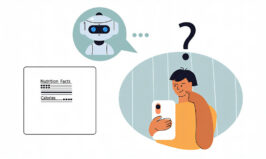
In the late 1970s, America had a collective awakening. For decades, the food industry had flourished, offering convenience and endless variety, largely in the absence of robust


In the late 1970s, America had a collective awakening. For decades, the food industry had flourished, offering convenience and endless variety, largely in the absence of robust

There always has been a longstanding debate in education about what skill sets students should learn and how their learning should be assessed. The advent of AI, however, has created an immediate need to reexamine

College students are mastering the art of “doing school” – but far too few are actually learning (Geddes et al., 2018; Stevens & Ramey, 2020;

I teach General Education composition classes to first year undergraduate students, which can make my job challenging before students even step into my class. Students

Universities are mandated to be the ultimate “learning culture,” powered by faculty who embody lifelong learning. We know that reflection is essential to learning; it’s

No one can deny that the world in which we live and work is changing at a tumultuous pace. We live in a knowledge economy,

Assessment for Learning (AfL), sometimes referred to as “formative assessment” has become part of the educational landscape in the U.S. and is heralded to significantly raise student achievement, yet we are often uncertain what it is and what it looks like in practice in higher education. To clarify, AfL includes the formal and informal processes that faculty and students use during instruction to gather evidence for the purpose of improving learning. The aim of AfL is to improve students’ mastery of the content and to equip and empower them as self-regulated, life-long learners.

The Winter/Spring 2016 issue of Peer Review highlights the powerful impact ‘transparency’ can have on learning for all students. One aspect of transparency is making obvious the intellectual practices involved in completing and evaluating a learning task. But making these processes visible for students is more easily said than done; we are experts in our fields for the very reasons that our thinking and evaluating are automatic and subconscious. It’s hard to describe exactly what we do intellectually when we synthesize or integrate, critique, or create. Similarly, it’s difficult to articulate the differences between an assignment we score as an A and one to which we give a B. Thus, a challenge in achieving transparency is developing a deep awareness of our own processes. Only then can we explicitly teach those thinking processes.

We need to work more with students on seeing exams as something more than just grade generating experiences. Exams can be powerful encounters through which
Educators have long recognized the importance and applicability of critical reflection across a wide range of educational settings, yet in practice it remains a challenging and nebulous concept for many to firmly grasp. In education, the concept of reflection dates back to the work of John Dewey (1933), who defined it as “active, persistent and careful consideration of any belief or supposed form of knowledge in the light of the grounds that support it and the further conclusion to which it tends” (p. 9). Dewey was the first to point out that experience alone does not constitute learning; instead, a conscious realization must occur for the experience to become a source of learning.